Email marketing can be a powerful channel for building long-term relationships with an audience, but strong results rarely come from simply sending messages to a contact list.
Every campaign depends on details: who receives the email, how the subject line is written, how the content is structured, whether the message is tested, and how the results are analyzed afterward.
Even well-planned email campaigns can be affected by common mistakes that reduce engagement and overall performance. Fortunately, most of these issues can be identified and addressed relatively quickly.
Below are six common email marketing mistakes that can hurt your results – and practical ways to avoid them.
1. Sending the Same Email to Everyone
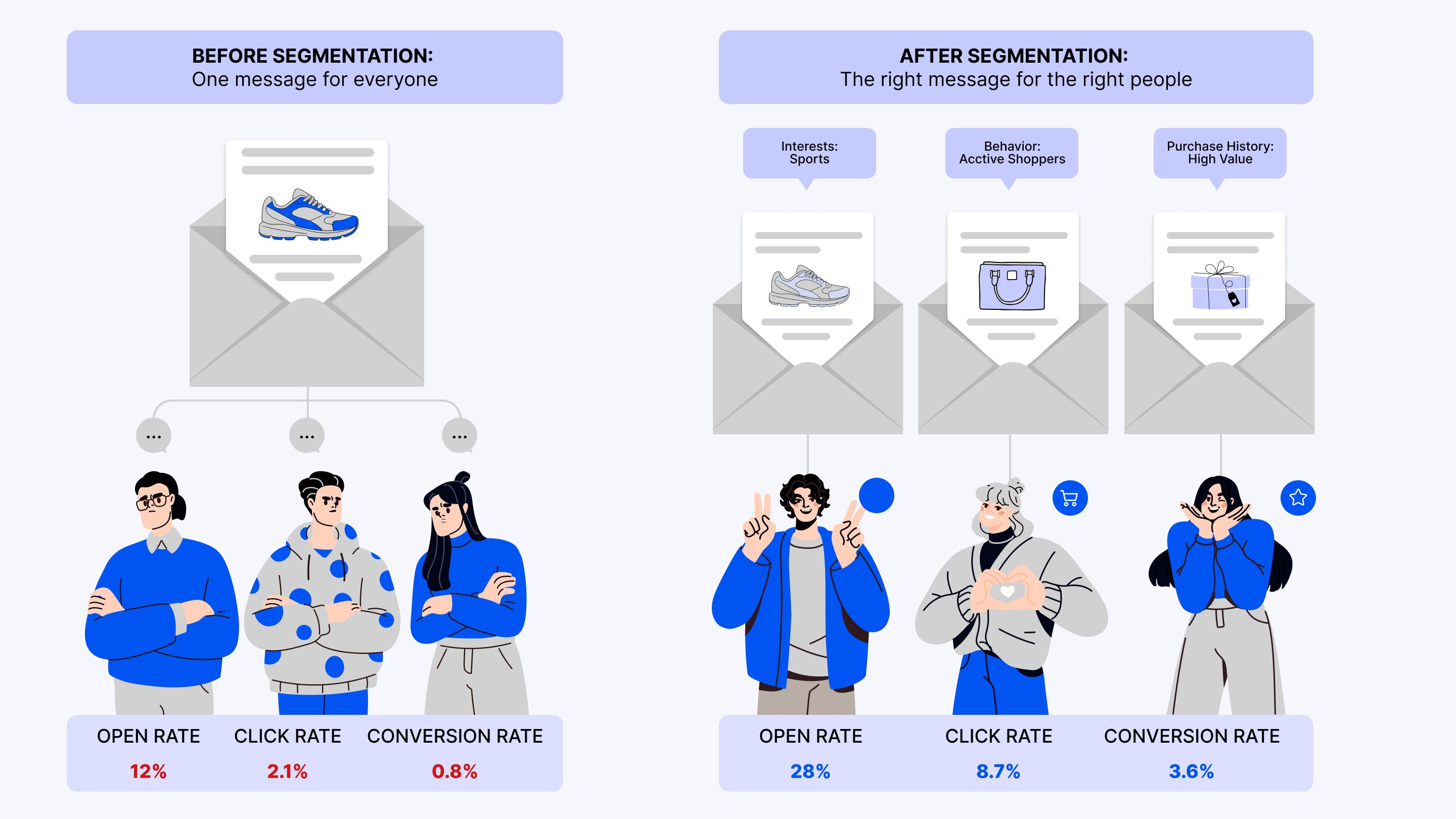
One of the most common email marketing mistakes is treating every subscriber the same way. An email list is rarely made up of people with the same needs. Different people have different interests, behaviors, purchase histories, and levels of engagement with a brand.
When businesses send the same message to their entire email list, the content often feels less relevant to many recipients. As a result, open rates, click-through rates, and conversions can suffer.
Segmentation helps solve this problem. By grouping subscribers based on factors such as demographics, interests, or previous interactions, marketers can deliver more personalized and relevant messages. Even simple segmentation can significantly improve engagement and help build stronger relationships with an audience over time.
2. Writing Subject Lines That Don't Spark Interest
The subject line is the first thing a recipient sees in their inbox. If it feels too generic, unclear, or irrelevant, the email may never be opened – even if the content inside is valuable.
A strong subject line should give recipients a clear reason to open the email. It can highlight a clear benefit, create curiosity, or speak directly to the recipient’s needs. At the same time, it should stay honest and match the actual content of the email.
Misleading or overly aggressive subject lines may increase opens once, but they can damage trust in the long run. The goal is not just to get attention – it is to set the right expectation for the message inside.
3. Overloading Emails with Too Much Text
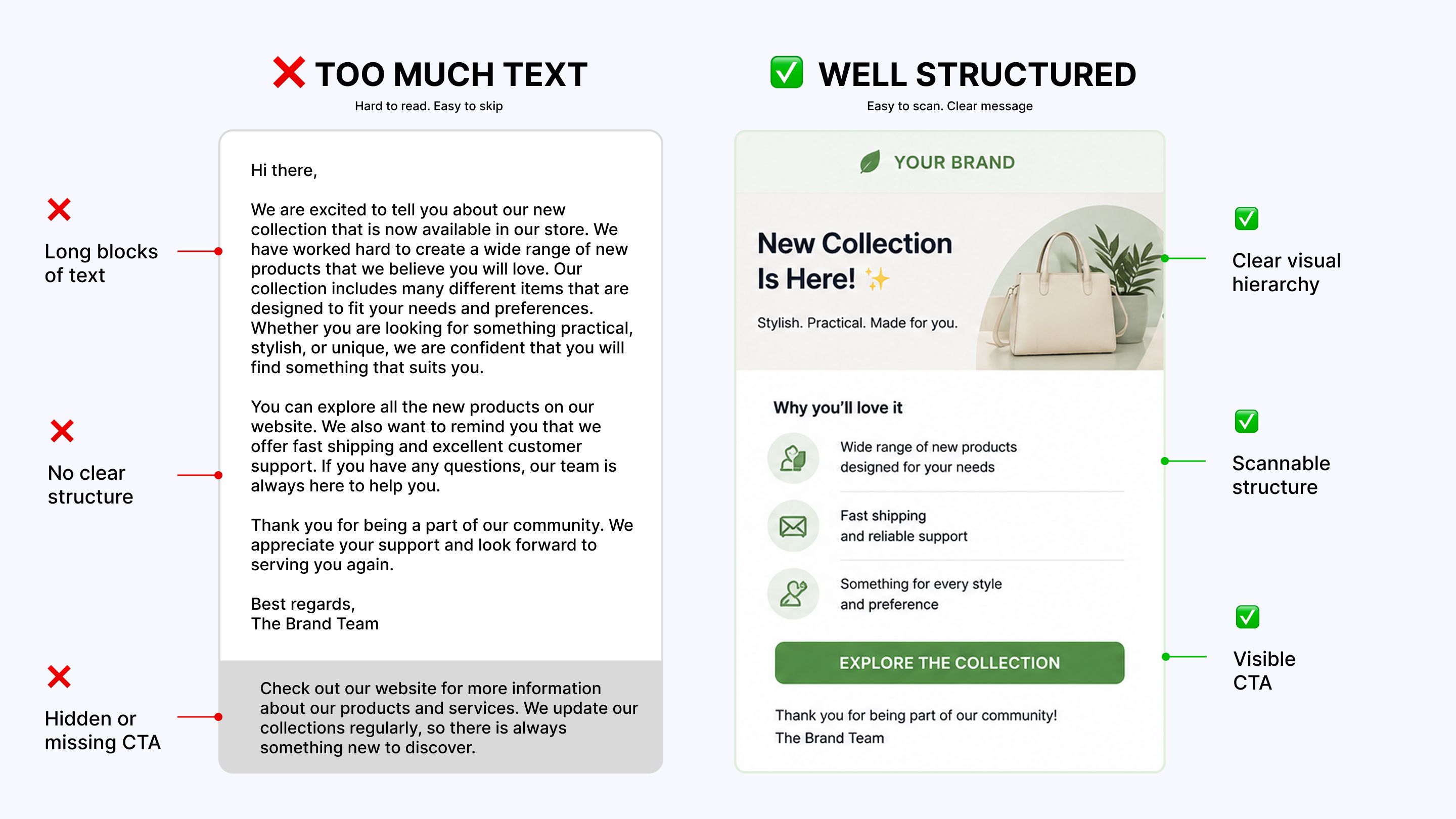
An email should be easy to read at a glance. When a message contains too much text without clear formatting, the recipient may lose interest before reaching the main point.
Most people scan emails quickly. That is why structure matters. Short paragraphs, clear headings, bullet points, visual accents, and a visible call to action help guide the reader through the message.
Good design is not about adding more elements to an email. It means helping the recipient understand the message faster. A well-structured email makes the offer, value, or next step clear – and increases the chances that the reader will take action.
4. Skipping A/B Testing
Even a well-prepared email campaign can perform differently than expected. Sometimes a subject line, call to action, image, or sending time may seem strong in theory but bring weaker results in practice.
A/B testing helps marketers understand what actually works for their audience. By comparing two versions of one campaign element, teams can make decisions based on real user behavior instead of assumptions.
Testing doesn’t have to be complicated. You can start with simple elements – subject lines, button text, email layout, or send time. Over time, these small tests help improve campaign performance and make every next email more effective.
5. Ignoring Campaign Performance Data
Email marketing doesn’t end after a campaign is sent. The next important step is understanding how it performed and what can be improved.
If marketers don’t analyze campaign data, they risk repeating the same mistakes over time. Open rates, click-through rates, unsubscribes, bounce rates, and conversions can show how the audience reacts to the message.
These metrics help identify what works and what needs attention. Maybe the subject line wasn’t strong enough. Maybe the call to action was unclear. Maybe the audience segment was too broad. Regular analysis helps turn every campaign into a source of insight – and makes future emails more effective.
6. Forgetting About Mobile Optimization
Today, many emails are opened on mobile devices. If an email is difficult to read on a smartphone, recipients may leave it without engaging with the content.
Small fonts, oversized images, buttons that are hard to tap, and layouts that don’t adapt to different screen sizes can negatively affect the user experience. Even a strong offer may be overlooked if the email is not mobile-friendly.
Before launching a campaign, it’s important to check how the email appears on different devices. A responsive design, clear formatting, and easy-to-use calls to action help ensure that subscribers can interact with the message comfortably, regardless of where they open it.
Key Takeaways
Email marketing success is rarely determined by a single campaign. Instead, it comes from consistently improving the small details that influence how subscribers interact with your messages.
Avoiding common mistakes such as poor segmentation, weak subject lines, cluttered content, lack of testing, limited performance analysis, and inadequate mobile optimization can have a significant impact on campaign results over time.
Every campaign provides useful insights. Teams that regularly test, analyze results, and refine their approach are more likely to improve performance over time. By focusing on these fundamentals, businesses can build stronger relationships with their audience and get more value from every email they send.